






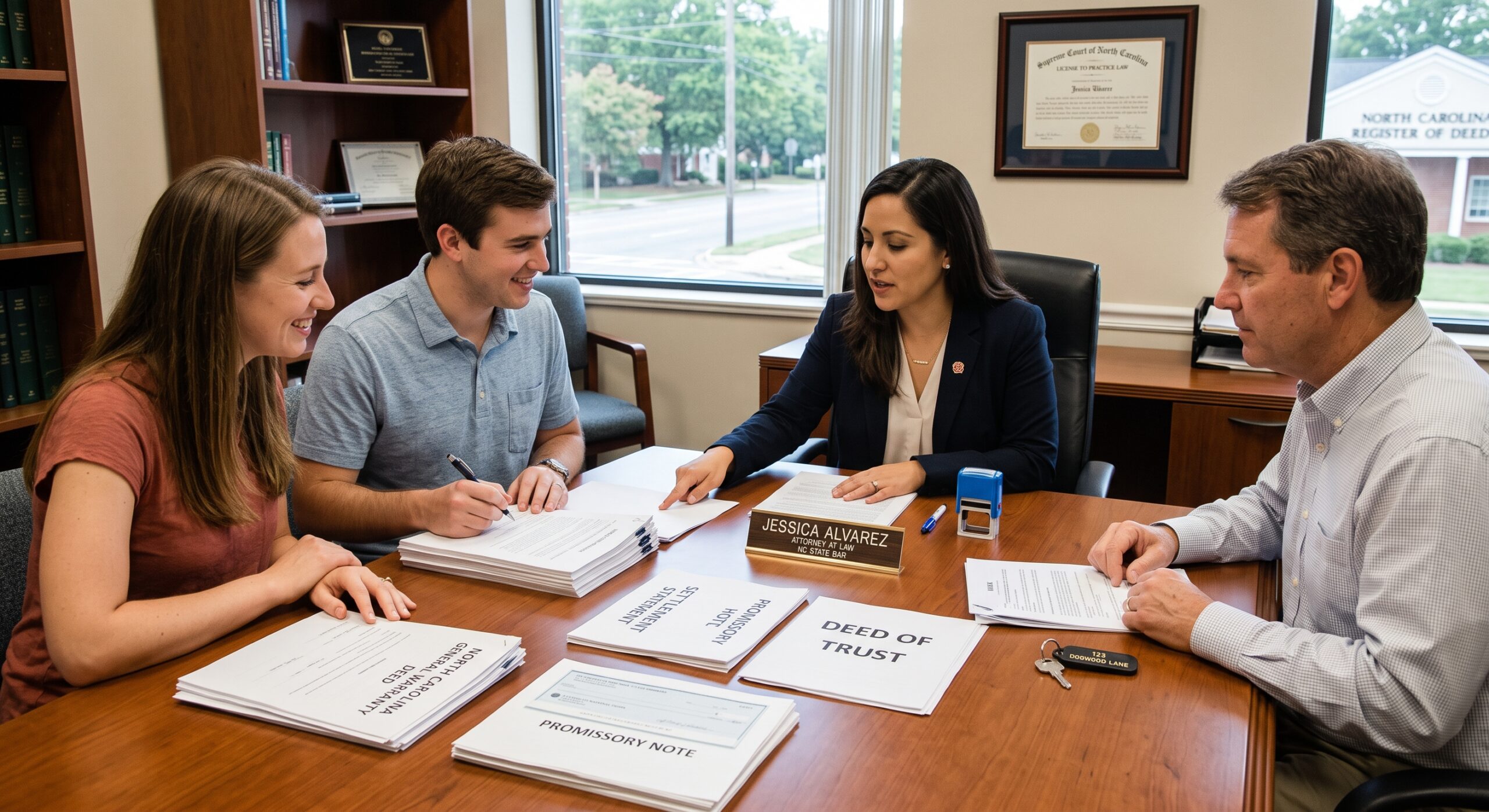
When buying or selling a home in North Carolina, clients are often surprised to learn that a licensed attorney is involved in the closing process.
If you’re moving from another state, you may have worked with a title company or escrow company in the past and wonder why North Carolina does things differently.
More Than a Signature at the Closing Table
Many people assume the attorney’s job is simply to prepare paperwork and witness signatures on closing day.
In reality, the attorney’s work begins long before anyone sits down at the closing table.
Before ownership can transfer, property records must be examined, lender requirements coordinated, title issues resolved, and legal documents prepared correctly. By the time buyers and sellers arrive for closing, much of the heavy lifting has already been completed behind the scenes.
Your Attorney Is Also Your Settlement Agent
In many states, a settlement company or title company manages the transaction. In North Carolina, that responsibility falls to the closing attorney.
As the settlement agent, the attorney becomes the central point of coordination for the transaction. Rather than having multiple parties handling different aspects of the closing, the Attorney’s Office oversees the legal and financial details from start to finish.
The attorney’s office typically:
- Coordinates with the buyer, seller, lender, and real estate agents.
- Reviews title records and resolves ownership issues.
- Receives and safeguards closing funds.
- Prepares settlement figures and closing documents.
- Oversees the signing appointment.
- Records documents with the county.
- Distributes funds once the transaction is officially complete.
Think of the closing attorney as the transaction’s air traffic controller. Their responsibility is to make sure every piece of the transaction arrives at the right place, at the right time, and in the correct order.
Why This Matters to Buyers
Purchasing a home isn’t just buying a structure. You’re purchasing a legal interest in real property.
Hidden title defects, unpaid liens, unreleased mortgages, ownership disputes, or recording errors can create serious problems if they are not discovered before closing.
A closing attorney helps identify and address these issues before the property changes hands. This review provides buyers with confidence that they are receiving clear ownership rights and that unexpected claims against the property have been addressed whenever possible.
Why This Matters to Sellers
Sellers benefit from attorney oversight as well.
The attorney helps ensure mortgage payoffs are handled correctly, sale proceeds are distributed accurately, and required legal documents are properly prepared and recorded.
Having an attorney oversee the settlement reduces the likelihood of delays, funding issues, or post-closing disputes that can arise when transactions involve multiple parties and moving pieces.
A Trusted Resource When Questions Arise
Even experienced homeowners encounter questions during a transaction:
- What do these closing documents mean?
- When do I receive my keys?
- When will sale proceeds be available?
- What happens if an issue is discovered before closing?
- Why did the lender request additional documentation?
A real estate attorney can provide answers and explain the legal implications of important decisions throughout the transaction.
That guidance can be especially valuable for first-time homebuyers, out-of-state purchasers, and individuals navigating complex transactions.
Final Thoughts:
Having a North Carolina real estate attorney overseeing the process provides confidence that the legal, financial, and title-related aspects of the transaction are being handled properly.
In North Carolina, the closing attorney is far more than a notary or document preparer. They serve as the settlement agent, problem solver, coordinator, and legal professional responsible for helping bring one of your most important financial transactions safely across the finish line.

Stott, Hollowell, Windham & Stancil
Latest posts by Stott, Hollowell, Windham & Stancil (see all)
- How Is Property Divided in a North Carolina Divorce? - October 12, 2026


 (704) 827-3941
 (704) 800-6454
 704-827-0644